


facebook
Evolving Beyond Conflict

Evolving Beyond Conflict

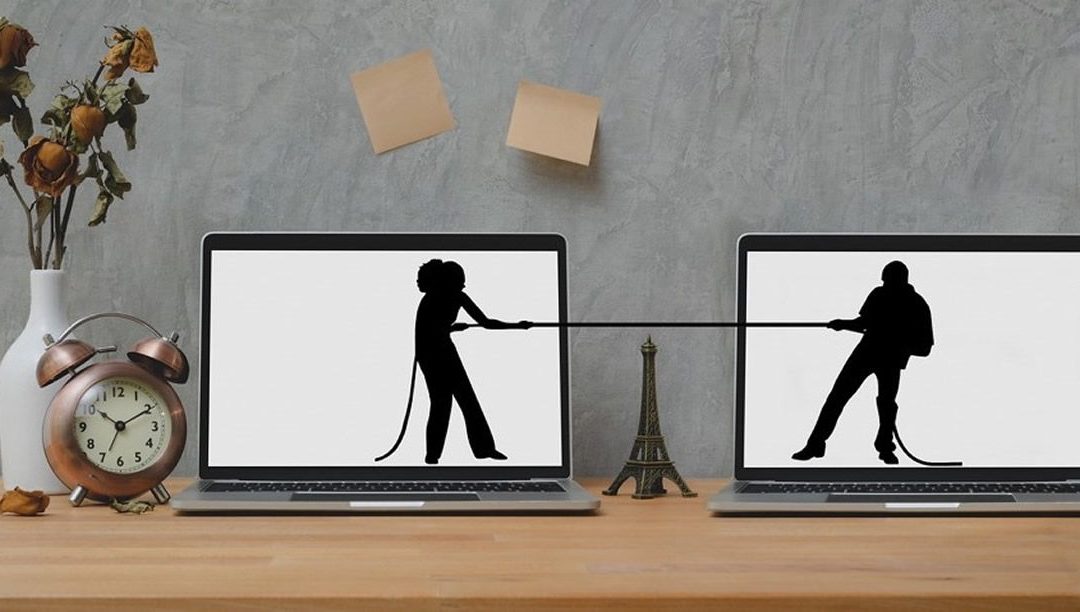
When you’re talking to someone and they have a different opinion to you, what is your go-to response?

  • Do you REJECT their beliefs and try to change their opinion to match yours?
  • Do you ABSORB their beliefs and try to change your opinion to match theirs?

Or do you LEARN from that space between two evolving humans?


One Minute Wonder

One Minute Wonder

Balance Body and Mind – how to do it!

Take ONE minute to bring yourself into physiological balance by sitting or standing as straight and tall as you can.

Straighten up through your mid-line and let your attention start at the top of your head and gently melt down through your spine to your tailbone. Are both shoulders as level as they can be? Look in a mirror to check the symmetry across your shoulders and collarbones.

Shift your body a little to bring balance to either side of your spine. Notice how it feels to tilt one shoulder or hip, and then re-balance.

Scan through your body for areas of softness and comfort, and rest in there for some moments.

Now shift attention to each of the following body parts in this order: head, shoulders, arms, hands, ribcage, spine, hips, thighs, knees, lower legs, ankles, feet.

Once balanced, your whole body and mind will work better.

Balancing your body helps you improve your emotional state, learning capability, and energy levels.


The Kiss of Change

The Kiss of Change

According to a social media thread, a high school in America was faced with an unusual problem after a particular trend had formed amongst teenage girls. Each day a group of girls would visit the bathroom and decorate the large mirror with ‘kiss marks’ after putting on strong coloured lipstick and then pressing their lips to the mirror. It is said that every night, the janitor would remove the lipstick marks, only to find them replaced the next day!

The teachers tried all manner of interventions to stop the behaviour, to no avail. The girls were cautioned and scolded, pleaded with, and politely asked to stop. Nothing changed their behaviour.

Finally, the principal decided that something had to be done.

She called all the girls to the bathroom and met them there with the janitor. She explained that the lip prints were causing a major problem for the poor guy who had to clean the mirrors every night, and to illustrate how difficult the mirror cleaning task was for him, she asked the janitor to demonstrate his efforts.

He took out a long-handled squeegee, dipped it in the toilet, and cleaned the mirror with it. Since then, there have been no lip prints on the mirror!

It just goes to show that learning is expedited when the same language is spoken, and that behavioural change can happen in a heartbeat.

Top Tip! When you hear someone say change is hard/takes a long time/is difficult, share this story!

SIMPLICITY for Being Well

SIMPLICITY for Being Well

Humans have forever found ways to take time-out to travel inwards, inviting altered states of consciousness for calm mind-body restoration.

Meditation is one way of doing this – it is healthful (don’t just take my word for it – the research is abundant). Not everyone can do this easily and for many being ‘guided’ is best.

Here’s a free guided meditation for you to nourish your mind as you travel on a journey of imagining an inner world that strengthens you. Recorded live during a group session on the full moon 21.09.21.


Simplicity Tip: If you like this, why not join our weekly group on Tuesday evenings.

Growing Up

Growing Up

When I was growing up, I knew, that I was.
Now I’m grown up, I don’t know, if I am.
I grew taller, up.
Now I’m shorter, down.
I chased fame and fortune.
Now, I trace flow, form.
And sound.

When I was growing up, I grew a mask and a suit.
I grew loud expressions.
To catch my reflection.
And fight or flee.
From lonely me.
Now, in naked standing.
I forget who I was, when I was growing up.

When I was growing up, I grew wounds, as I collided.
I prized a head that was ahead.
Ignored my heart that grew apart.
How now, is the dwelling.
Of simple healing pieces, of peace.
Alchemising in delight.
As new melodies ignite.

When I was growing up, I knew everything back then.
Now, I know nothing about everything.
Yet I yearned for something.
Perhaps to achieve?
Little did I know.
I achieved everything I experienced.
And many seeds were sown.

When I do become a grown up, how will I know?
What will I be up to?
To where, will I have grown?
Who will I be?
And what might I chase?
Will my roots be strong and stable?
And my leaves whisper their grace.

Kay Cooke 2020


Anger:  How do you do?

Anger: How do you do?

What happens when we swallow our anger?  When we don’t or can’t suitably discharge it?  When instead, we find it ruminating inside the mind?

Most people understand that anger can be ignited by a tangible threat (eg. a car swerving towards us) and by a perception (e.g. “I think that driver directed the car towards us on purpose”).

And it’s probably fair to suggest that we’ve all experienced nano-second reactions diverting all resources towards bodily readiness for fight or flight. Anger switches the brain to ‘survival’ mode and initiates physiological readiness for self-defence.

Rational thinking then has no feed and is depleted.

Interestingly, studies show that anger can actually lower levels of the stress hormone cortisol because it stimulates the brain’s left hemisphere into taking purposeful action, like standing up to a bully (outward expression), or turning inwards to propel you away from repeating a hideous behaviour.

Unfortunately, society does tend to reward those who use anger to shout loudest, though it’s difficult to see how upset, irrational behaviour, or even violence might be useful to anyone.

Some people use their expression of anger to get action from others, and tantrums are usually the result of anger being used as a tool to manipulate the behaviour of others, or as a pitch for hierarchical dominance.

So what happens when we swallow our anger? When we don’t or can’t suitably discharge it? When instead, we find it ruminating inside the mind?

Then our underlying stress levels simmer, and simmer, until a safer displacement opportunity turns up, like kicking the dog, or shouting at the kids, when we really feel mad towards an absent colleague.

Sometimes we ruminate enough to bring the simmering emotion to boiling point, causing great distress to those bewildered witnesses who ask ‘how did that happen?’ judging a seemingly insignificant word or action, to have caused the eruption.

Repressing one’s anger can also produce passive aggressive behaviours like withdrawing our attention from, or ignoring others, which leaves the other person feeling unsure about what’s happening. And since our brains do not like uncertainty, generating it in another person, like the feeling of ‘not knowing’, can precipitate their sense of perceived threat (thus anger gets discharged through punishment that avoids violence or admonishment).

NLP enables us to look at the boundary conditions of someone’s ‘map of the world’ and this is where we find our highly prized and defendable life rules. Sometimes these are evident as core values, for example if you prize freedom as a core value and someone tries to restrain you, anger may be instantaneous, unless you’ve learned a better strategy.

Did you notice your strategies for anger?

Are your boundary conditions formidable, or flexible?

NLP provides a vital foundation of skills that help you recognise and upgrade thinking, feeling and behavioural strategies, including anger. Learn with us, so you get to make swift changes within yourself, and when dealing with the strategies of others.

the happybrain co.
Privacy Overview

This website uses cookies so that we can provide you with the best user experience possible. Cookie information is stored in your browser and performs functions such as recognising you when you return to our website and helping our team to understand which sections of the website you find most interesting and useful.