by Kay Cooke | Feb 28, 2022 | next generation
“What do you want?” I asked 45 year old Pete (who came to see me to learn how to de-stress).
“I want to enjoy what I do again – better work/life balance.” he replied sincerely.
“Tell me more?” I enquired.
“Well, I’d like us to spend more time as a family unit.” he said, nodding to himself.
“More time? One or two minutes a week?” I gently teased.
“Oh no … oh … um… probably 20 minutes more – each day.” he concluded.
“20 minutes a day – watching TV?” I was curious about his lack of specificity.
“No, I mean spending 20 minutes a day, helping my son Joe (15) with his homework.”
“Ah great that he’s asked for help.”, I smiled.
“Well, no, of course he hasn’t asked for help, he can’t see the importance of this, but his grades are poor.”
“What will that do for you – spending 20 mins a day on Joe’s homework?” I invited him to consider.
“I want him to achieve more.” he insisted.
“And …” I paused.
“If I help him with his homework, he will get better grades.” he asserted.
“What will Joe think about your plan?” I gestured open palms.
”He’ll hate it, but it’ll stop him playing his airy-fairy music.” He gestured closed palms.
“How do you think your goals for Joe will play out over time?” We took a moment to visualise the on-going rippling effects of Pete asserting his goal for Joe.
“Oh… we’ll probably end up fighting, just like my dad and I used to… I’ll get even more stressed…”
And the penny dropped.
It’s always fun to hear the penny drop as the most educated minds often miss the value of a foundational principle of NLP, that is getting clarity of your brain aim, your goals for yourself. And being aware of how we set up self-imposed stress by assuming our goals for others – especially our children – will help us be happier. Actually, that’s messy.
by Kay Cooke | Jan 31, 2022 | next generation
Society talks a lot about mental and emotional health problems but talking is not enough – we need to do at least these two key things to drive change:
- Understand what is happening inside the brain to produce motivation/de-motivation and good decisions/bad decisions.
- Build new strategies for doing mental, emotional, and physical wellbeing and happiness rather than knowing about it!
Join us in Hexham, Northumberland, for the next LIVE 2-day Happy Brain training FEB 12 & 13, 10am – 4pm where you get to step inside the uniquely practical Happy Brain model and discover:
* ‘what’ happens during the processes of thinking
* ‘how’ the brain makes sense of its chemical signals we call emotions
* ‘why’ we need to pay attention to neurological patterns that guide our auto-pilot brains
Short promo video: https://youtu.be/KAbrBvZLOeQ
What previous delegates have said: https://youtu.be/fkttVCsLzIc
Website info & booking: https://thehappybrainco.com/product/happy-brain-online-training/
by Kay Cooke | Nov 29, 2021 | next generation
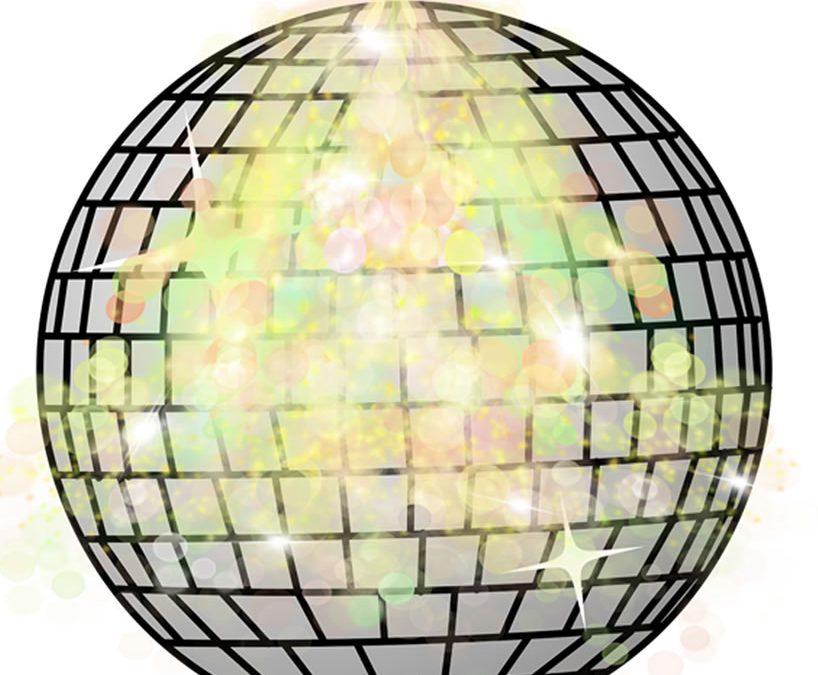
Throughout history, across the world, mirrors have been used to deflect bad spirits and direct lightness into the environment.
I use imaginary mirrors and mind-magic experiments to help children deal with bullies or situations that feel threatening. The key to this success is engaging a richness of sensory-based imagination. I’ve been using this technique for years with clients of all ages, and for myself. It works, try it!
Here’s how to do it:
Invite your child to imagine they are surrounded by a bright yellow cloud or mist. Any colour is ok if it feels powerful, I suggest yellow as a colour commonly associated with inner power.
Have your child visualise this yellow mist swirling around their body in a clockwise direction growing up from underfoot and making a swirl-knot overhead. The mist is quite faint, is see-through, has a cooling taste, smells lemony and sounds sparkly.
The more associated to sensations, the stronger the influence. Have them experiment with swirling faster or slower – which swirl speed helps them feel strongest? Become genuinely curious about the effects of this mind experiment.
Ask them to take a big, deep breath in through their nostrils inhaling lemony mist flowing down deeply inside the lungs and when they breathe out, let the long, slow out-breath gently expand the size of the yellow cloud surrounding them.
After mastering the art of an expanding, swirling yellow mist, they are ready to add the outer layer of magic mirrors – all facing outwards. Some people see mirrors of the same size and shape, while others see different sizes and shapes. Experiment with the design of the mirrored ‘shield’ perhaps hearing them clicking into place.
Now inside this space, feel the new distance from mean words or feelings. Some people find it quite fun to visualise hurtful words or feelings bouncing off the outward facing mirrors into the air, before disappearing.
Top Tip! Invite your child to identify where in their body they feel most confident when doing this. That’s a hypnotic suggestion by the way!

by Kay Cooke | Sep 27, 2021 | next generation
September brought us the Equinox, marking a moment of ‘balance’ in our yearly calendar, with day and night available to us, in equal measure.
I guess you know when you’re (metaphorically) tipping out of balance, right? When it seems all that’s left is to give up or give over to some external authority on your wellbeing?
Balance is one of our key themes when working with the next generation, we want them to trust that they can always find it, know how to achieve it, and don’t need to rely on an external authority to do the re-balancing for them. We call this RESILIENCE.
We must teach resilience as an ‘inside job’ so the next generation learns how to self-adjust their personal wellbeing rather than defaulting to the notion that the solution, or the blame, lies elsewhere.
Sometimes in our work, we find parents and teachers don’t believe it is possible for young people to self-manage wayward thoughts and emotions and make it their priority to step in at the first hint of challenge. Fast forward to a generation of teenagers who never learned to hardwire the skills of ‘doing’ resilience i.e., falling over, picking self-up, reflecting on what to do differently next time, taking responsibility for the results in life and adjusting mindset/behaviours to meet new needs. Simply put, this is the process of learning and a far cry from our ‘woke’ generation who want to blame or change others. How have we forgotten our nature as exquisite learners?
And those parents and teachers who DO believe it is possible for young people to self-manage wayward thoughts and emotions, often just don’t know how to teach these skills. Thankfully we do.
This month’s Resilience Tip is to help children imagine their future self as buoyant and able to respond to and rebalance after any of life’s whirlwinds. Imagineering (as we call it) is nature’s way of formatting neural pathways into codes of possibility. That’s how we landed on the moon – someone had the idea first … It was an imagined possibility that eventually became tangible actions.
I vote for more seeding of great ideas inside the minds of our next generation. Imaginings of a flourishing future. We cannot thrive as a species if we continue to fill young people’s imaginations with fear and helplessness.
We all become what we repeatedly do, so why not help your child habituate resilience inside their mind’s eye and set a clear direction for their brains and bodies to follow?
We all deserve a thriving next generation, don’t we?

by Kay Cooke | Jun 2, 2021 | next generation
Recently, on an online Parent Forum, I read
“my child would NEVER do that.”
And I thought ‘how do you know?’
And I wondered ‘could they be wrong?’
That parent had asked for help with their 5-year old’s emotional responses.
The suggestion put forward was rejected out of hand “my child would NEVER do that”
“But s/he COULD don’t you think?”
When I hear the opinions of parents, limiting a child’s opportunity to explore potential solutions (just because they don’t believe it possible), that strengthens my resolve to help parents understand how brains work.
Neurologically, there are endless combinations of think-feel-do. They are there to be tried, tested and mapped.
Psychologically there are limits. Thoughts, drive feelings, which drive behaviour.
Don’t let your beliefs limit your child’s chance to discover their unlimited potential.

by Kay Cooke | Apr 30, 2021 | next generation
Parents of teenagers!
Stressed? Frequently? Especially when they ask “what became of that cute snuggle-bundle who utterly adored me as ‘the best mummy/daddy in the whole wide world’?”
And they recall those sincere pre-pubescent promises of “I’ll never smoke/stay out late/take drugs …”
However, all too soon these babies become teenagers! And the shock of this new era can feel like a personal loss of (unrealistic) hopes and dreams. And as the teen’s biological programming shifts a gear, the little darlings start taking unprecedented risks, pushing boundaries, and even contemplating how they no longer ‘fit’ the family nest.
At this point, there may be tension! Because despite parents’ best intentions, their expertise and ‘guidance’ can now create volcanic eruptions of molten emotions.
Stress can occur from a simple thought like “s/he ‘should’ do x, y, z …” and drama so often follows frustration, when the teen doesn’t follow parental wisdom.
But spare a thought for the teenager too; teen times can feel both exhilarating and frightening as everything (from body to bestie) changes as a new transitional map is in the making.
While it is best not to allow these differences to build sticky or stormy relationships, sometimes it just happens. My advice in these situations is simple, stay focused on the long game – a rewarding future relationship and happy family.
Perfect Storm – a metaphor for parents
To survive any storm a ship needs to remain stable while the crew focuses on tasks that navigate the weather conditions. At all times, the Captain must keep clear sight of all working parts (people and things), s/he must also keep sight of the destination.
To excel as a Captain, it is always best to maintain a calm, steady self-managed emotional state.
In this metaphor, teens have shifted from being happy crew, to feeling like unwilling passengers (or prisoners!). A good Captain, stays focused on the whole, bigger picture and visualises the vessel arriving safely at its destination.
Destination – a technique for parents
While navigating this type of storm, as a Captain, it can be useful to stop and reflect on where you started (love) and where you are going (love).
Imagine, 20+ years from now, a happy family gathering where all memories of the choppy seas of teendom, have long subsided.
As you stop and look beyond any of today’s storms, you see that far-away radiant land, don’t you?
See that future you immersed in joyous fun with your future family, probably looking back and laughing at this current state of affairs. Do this and you now have created a more resourceful emotional state to handle your day.
Note: Parents are always asking for advice, coaching or training in how to ‘manage’ their teens and NLP is a perfect technology for influencing with integrity (the art of great parenting). Yet I have to add, that when we work with teenagers directly, we often find they themselves become stable ships for their parents! And with so many teenagers now doing our Happy Brain programmes (as an introduction to NLP), look out for the new super spreaders of next-generation thinking!

Recent Comments