
by Kay Spare Login | Sep 4, 2023 | be well, mental health, NLP, parenting, psychology, resilience, work well
What does ‘respect’ mean to you?
So often people tell me their happiness/unhappiness is related to whether they feel respected or disrespected. And I wonder how they measure those matters; are there rules?
I hear people complaining that they feel small if they don’t receive enough/certain respect. And I hear other people bragging that they feel big when they demand respect by making others bend their words or behaviours.
Big or small –using the matter of respect to gain validation is at best a hollow win and at worst, a weapon.
Awareness. Is key. If you want to nourish your mind, take note of your reaction to the concept of respect. What does it mean to you?
My antidote to ‘issues’ arising from this matter, is to look for shining examples of people who neither play big nor small. Instead, they self-regulate their internal responses to external stimuli and get on with flowing along their personal path.
How does your ‘respect-o-meter’ work?
by Kay Cooke | Apr 1, 2023 | be well, mental health, mind-body, neurology, next generation, NLP, parenting, parents, psychology, resilience, workingwithkids
“I’m bored.”
Means “I don’t know what to do”?
Which implies “I need to know what to do”?
And therefore “please help me to avoid this feeling of uncertainty.”
TIME is the commodity and EMOTION is the currency; when we have time, we want to fill it will good feelings. And we can.
Yet a cruel outcome of fast-fix good feelings is ‘learned helplessness (“I’m bored – fix my feelings”)’ nourished by passive feel-goods like TV, social media, sugar, alcohol …
Phew!
Anxiety is dissolved by passive feel-goods. But not for long because we never resolve the nagging feeling that we dislike ‘that boredom space’.
Such a shame!
So many people feeling miserable and trapped within the solutions of quick-fixing profiteers.
Because!
Our brains are so easily trained, wired and re-wired.
Rewired by passive learning (the less aware we are of the boredom programming, the easier the acceptance).
Rewired by active learning and creative engagement with boredom to experience new and novel handling of uncertainty:
problem solving – how will I make that old sofa more comfortable?
creation – what kind of meal can I make out of these ingredients?
imagination – what will my garden look like if I dig up the flower bed?
experimentation – which windowsill has best suited my house plant?
exploration – let’s visit that woodland walk I heard about.
discovery – which food upset my digestion?
role play – how does it feel to pretend to be like my favourite calm person?
learning – which thoughts motivate me most?
Boredom!
Provides training ground for THRIVING through adapting and adjusting to difficulties and disappointments. Thriving brains know more conscious CHOICES.
Boredom!
Also provides training ground for SURVIVING through having our attention controlled by someone else. Surviving brains revert to auto-pilot and can’t make conscious choices.
Boredom!
Is a curious description of a state of human consciousness where there is space to be trained into helplessness and survival behaviour, or it is a space to build resourcefulness and resilience for a thriving future.
Thrive!
Let your children – and your own inner child – handle boredom actively …
by Kay Cooke | Sep 29, 2022 | be well, mental health, mind-body, psychology, resilience, work well
Balance – it’s in our nature.
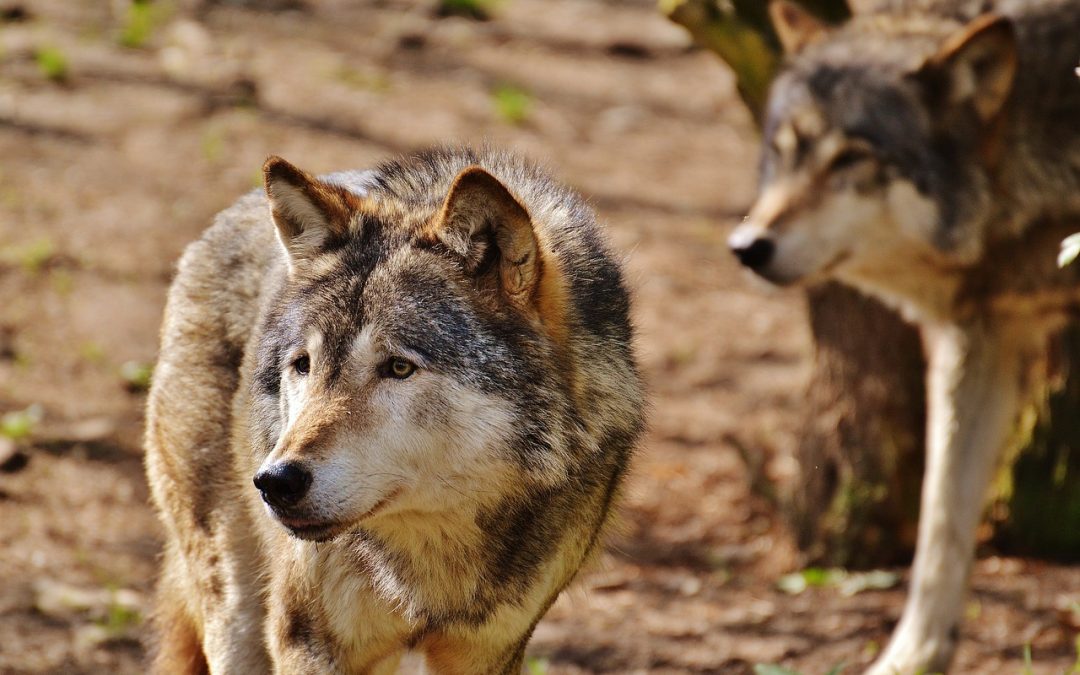
In 1995 fourteen wolves were released into Yellowstone National Park.
At first deer numbers drastically reduced and then deer behaviour changed as they moved into areas less visible to the wolves.
In the absence of deer foraging, flowers and trees began flourishing, which led to berries, bugs and insects, which in turn attracted more birds. And then beavers returned, building dams that provided habitat for otters, muskrats, and reptiles. Coyote numbers reduced causing proliferation of rabbit and mice, which in turn attracted hawks, red foxes, badgers, and weasels.
And once a ‘balance’ between predator and prey was established, the park’s physical geography had changed as (previously eroded) riverbanks were now stabilised by the new vegetation.
What’s this got to do with NLP?
Have you ever noticed how the mind’s internal environment can house both predator AND prey? And although people come to us seeking ‘balance’ between work, home, and play, learning to ‘balance’ their internal habitat, always positively affects management of the outside world.
What are the mechanisms for restoring the mind’s habitat to flourishing vitality? Solutions start with awareness of possibility and an attitude of willingness to seek ‘balance’.
To do this we must think on purpose! Because thoughts alone either deplete or nourish brain-body chemistry, which in turn can cause erosion OR restoration of sustainable balances within.
Keep feeding thoughts that nurture thriving, that’s all. This alone will starve what no longer needs to exist in that place.
NLP is a system for sustainable inner balance! Do more of it! And if you can’t easily do it for yourself – do it so that others in your social system may thrive. Humanity is in great need of ‘balance’. And nature teaches us all we need to know.
Discover how we can help you balance your thoughts, feelings and behaviours and change your internal geography: HERE

Recent Comments