
by Kay Cooke | Apr 1, 2023 | be well, mental health, mind-body, neurology, next generation, NLP, parenting, parents, psychology, resilience, workingwithkids
“I’m bored.”
Means “I don’t know what to do”?
Which implies “I need to know what to do”?
And therefore “please help me to avoid this feeling of uncertainty.”
TIME is the commodity and EMOTION is the currency; when we have time, we want to fill it will good feelings. And we can.
Yet a cruel outcome of fast-fix good feelings is ‘learned helplessness (“I’m bored – fix my feelings”)’ nourished by passive feel-goods like TV, social media, sugar, alcohol …
Phew!
Anxiety is dissolved by passive feel-goods. But not for long because we never resolve the nagging feeling that we dislike ‘that boredom space’.
Such a shame!
So many people feeling miserable and trapped within the solutions of quick-fixing profiteers.
Because!
Our brains are so easily trained, wired and re-wired.
Rewired by passive learning (the less aware we are of the boredom programming, the easier the acceptance).
Rewired by active learning and creative engagement with boredom to experience new and novel handling of uncertainty:
problem solving – how will I make that old sofa more comfortable?
creation – what kind of meal can I make out of these ingredients?
imagination – what will my garden look like if I dig up the flower bed?
experimentation – which windowsill has best suited my house plant?
exploration – let’s visit that woodland walk I heard about.
discovery – which food upset my digestion?
role play – how does it feel to pretend to be like my favourite calm person?
learning – which thoughts motivate me most?
Boredom!
Provides training ground for THRIVING through adapting and adjusting to difficulties and disappointments. Thriving brains know more conscious CHOICES.
Boredom!
Also provides training ground for SURVIVING through having our attention controlled by someone else. Surviving brains revert to auto-pilot and can’t make conscious choices.
Boredom!
Is a curious description of a state of human consciousness where there is space to be trained into helplessness and survival behaviour, or it is a space to build resourcefulness and resilience for a thriving future.
Thrive!
Let your children – and your own inner child – handle boredom actively …
by Kay Cooke | Jan 30, 2023 | next generation
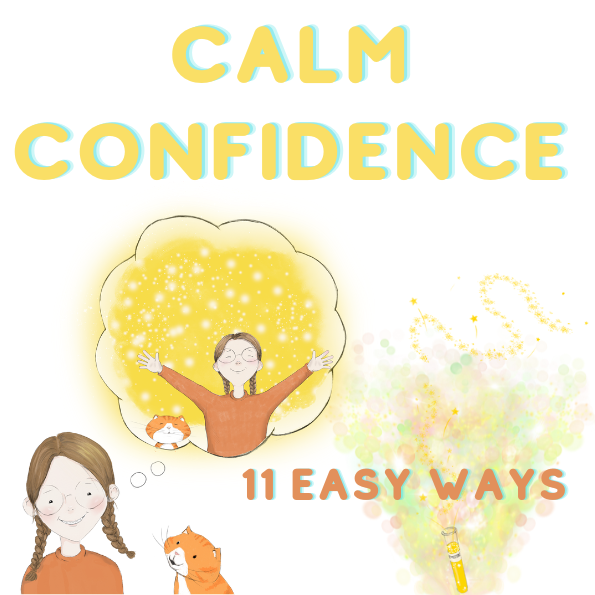
Created in 2010, these fun, easy to follow brain training activities are ideal for young families and primary classrooms.
Instant Calm – Belly Breathing
Quietly Clear – Building Confidence
Brainy learning – Balance Body & Mind
Brain balance – Finger Play
Personal power – Heartful
Choose feelings – Spinning Feelings
Perfect peacefulness – White Feather
Brain boost – Eyes Around
Chaos to calm – Glitter Ball
Power up – Power Pack
Reassure an anxious mind – Finger Chat
Welcome to these practical activities that help you minimise stress and create feelings of calm and confidence. You will find increased self-esteem
and smarter thinking are very pleasant by-products.
This kit will train your nervous system to be calmer and to stay calm and confident in challenging situations. Practising them regularly will mean that you’ll get better at being able to do them whenever you really need to.
There are 11 fun activities for you to experiment with, each one is proven to help develop resilience. CLICK HERE

by Kay Cooke | Jan 30, 2023 | be well
“If you always do what you always did, you’ll always get what you always got.”
Henry Ford
Does that make sense to you?
Where are the ‘problem-repeats’ in your life?
You know it’s often easier to notice those patterns in other people’s lives, but when you cast your your mind back through your timeline, which problems keep repeating?
Did you ever try to change them?
Did you ever find a really good coach to help you harness the superpower of imagineering?
Your future starts in imagination – whether you are imagining what you are going to do later today, tomorrow, or next year – you’re setting your brain’s GPS.
We walked on the moon thanks to someone’s imagination. Yet some people terrorise and limit their future selves with wayward imaginineering! And so it needs to be harnessed and handled with precision. NLP is an amazing tool to help you do this easily.
For now, you could start by imagining what would happen if a mysterious force extinguished ‘problem-repeats’ from your world and breathed new life-energy into your life. What differences shine through? What does not change at all?
Imagination is a super skill, learn to use it with super precision. Isn’t it time to shine?
by Kay Cooke | Mar 31, 2022 | next generation
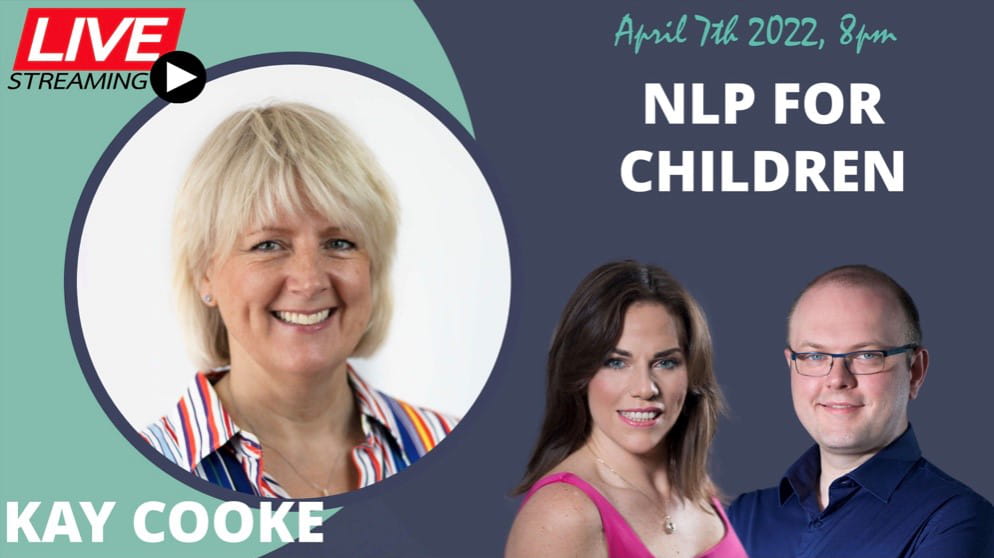
On Thursday, April 7th 2022 I delivered a Masterclass with esteemed Swiss colleagues Michel and Nathalie. More details of their website here
In this Master Class I shared many of my experiences working in the field of NLP with children, teenagers, and families.
See some simple models for imagining a 3-dimensional brain that’s easy to understand.
Free to watch for anyone who is interested in:
• understanding how the human brain works
• how learning happens
• differences between neurology, biology, and psychology
• specialist application of NLP for working with kids
• how to build a thriving next generation
Watch the Master Class COPY & PASTE: https://youtu.be/r3RRi16J6Pg

by Kay Cooke | Feb 28, 2022 | next generation
“What do you want?” I asked 45 year old Pete (who came to see me to learn how to de-stress).
“I want to enjoy what I do again – better work/life balance.” he replied sincerely.
“Tell me more?” I enquired.
“Well, I’d like us to spend more time as a family unit.” he said, nodding to himself.
“More time? One or two minutes a week?” I gently teased.
“Oh no … oh … um… probably 20 minutes more – each day.” he concluded.
“20 minutes a day – watching TV?” I was curious about his lack of specificity.
“No, I mean spending 20 minutes a day, helping my son Joe (15) with his homework.”
“Ah great that he’s asked for help.”, I smiled.
“Well, no, of course he hasn’t asked for help, he can’t see the importance of this, but his grades are poor.”
“What will that do for you – spending 20 mins a day on Joe’s homework?” I invited him to consider.
“I want him to achieve more.” he insisted.
“And …” I paused.
“If I help him with his homework, he will get better grades.” he asserted.
“What will Joe think about your plan?” I gestured open palms.
”He’ll hate it, but it’ll stop him playing his airy-fairy music.” He gestured closed palms.
“How do you think your goals for Joe will play out over time?” We took a moment to visualise the on-going rippling effects of Pete asserting his goal for Joe.
“Oh… we’ll probably end up fighting, just like my dad and I used to… I’ll get even more stressed…”
And the penny dropped.
It’s always fun to hear the penny drop as the most educated minds often miss the value of a foundational principle of NLP, that is getting clarity of your brain aim, your goals for yourself. And being aware of how we set up self-imposed stress by assuming our goals for others – especially our children – will help us be happier. Actually, that’s messy.

Recent Comments